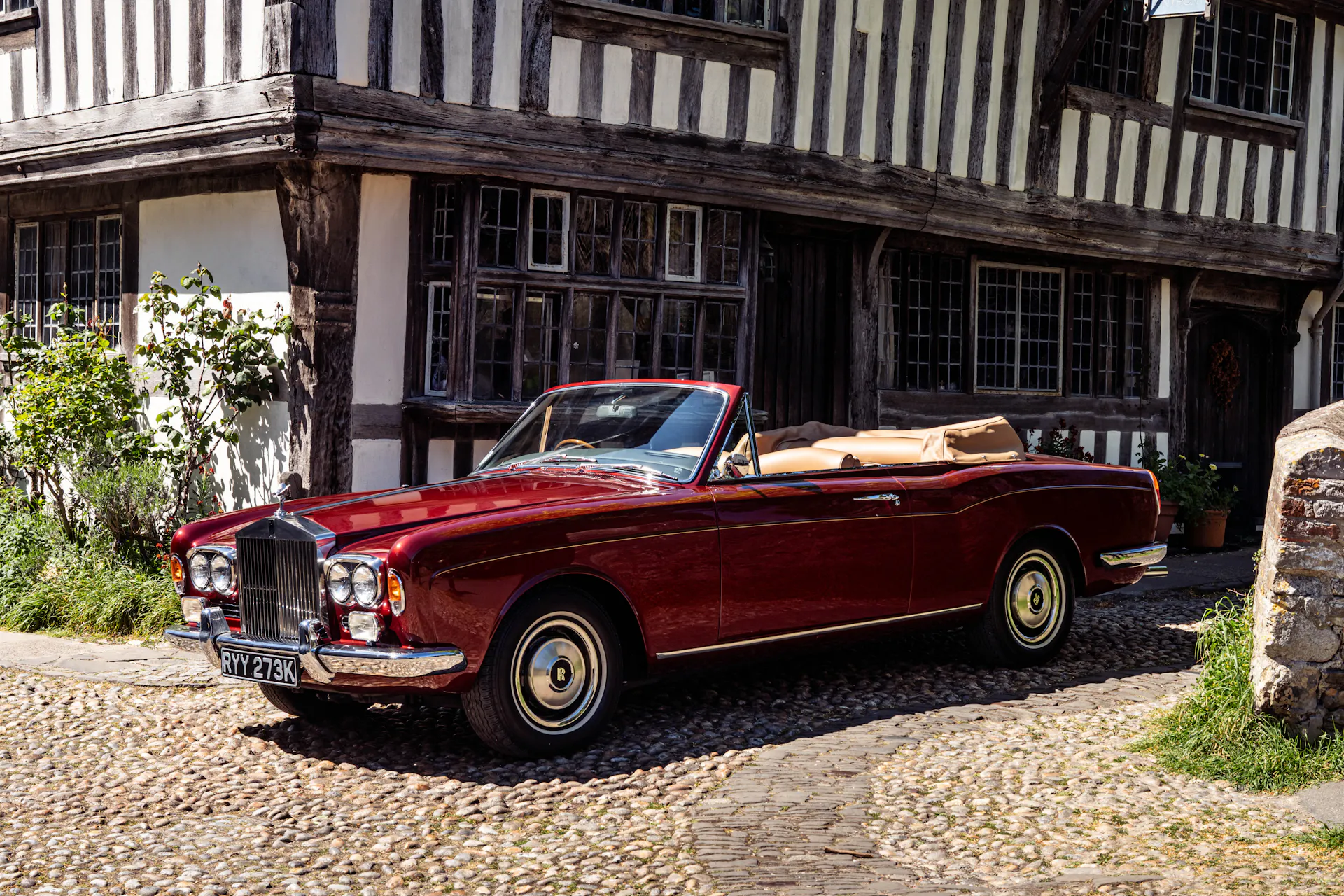
1971 Rolls-Royce Corniche Drophead Coupé
An exceptionally well-documented example, subject to a comprehensive, multi-year restoration and mechanical rebuild
Few cars better capture the spirit of discreet British luxury than the Rolls-Royce Corniche Drophead Coupé. Effortlessly elegant, beautifully engineered and built in limited numbers, it remains one of the most usable and desirable post-war Rolls-Royce motor cars.
In 1971, the Corniche made its debut and quickly rose to prominence as the crème-de-la-crème of its illustrious British marque. At the time of its launch, it was the most expensive production car in the world, its standard-fit stereo system alone reputedly costing more than the average UK house. Developed by Mulliner Park Ward, it was widely regarded as the ‘Rolls-Royce of all Rolls-Royces’- a reputation it retains to this day.
The example offered here, affectionately known as ‘Lady B’, is notable not only for its inherent quality, but for the depth of its history and the extraordinary level of investment it has received over the past decade.
Provenance and Early History
First registered in the Reading area, ‘Lady B’ was subsequently exported to Hong Kong during its early life. Originally finished in Regal Red, the car was refinished in Peacock Blue while overseas, reportedly for superstitious reasons.
The car returned to the UK and was acquired by its current custodians, the Bagshaw family, in 2009. Over the past fifteen years, it has been carefully enjoyed and, in more recent times, comprehensively restored.
Restoration and Mechanical Programme
Rather than a single cosmetic restoration, this Corniche has undergone a methodical, staged programme of works between 2015 and 2022, addressing every aspect of the car - structural, cosmetic and mechanical.
In addition, during the last three years of ownership, a full nut-and-bolt restoration was undertaken by Ranmore, returning the car to its original colour scheme and ensuring a level of finish commensurate with the marque.
The original eight-track stereo has been retained, while the car now features a tobacco leather interior and matching hood, complemented by beautifully executed handmade walnut trim.
Mechanical Recommissioning (2015)
Initial works focused on returning the car to reliable road use:
Coachwork Restoration (2019–2020)
A significant phase of body restoration followed:
Interior and Finishing (2020)
Engine Rebuild (2022)
During the course of use, the engine was found to be beyond economical repair:
Final Works & Completion (2022)
A final phase of detailed work ensured the car was properly finished:
Total Investment
The history file records expenditure in excess of:
£150,000+ in restoration and mechanical works
(Approximately £180,000 including original purchase)
This level of investment reflects a clear philosophy: to restore the car properly, rather than economically.
Condition and Presentation
Today, the Corniche presents as one would expect from such a programme:
Importantly, this is not simply a restored car, but a sorted and usable example, developed over time rather than completed in haste.
Documentation
The car is accompanied by an unusually complete history file, including:
This level of documentation provides rare transparency and reassurance.
Summary
In today’s market, where many Corniches have received only partial or cosmetic restoration, this example stands apart.
It represents an opportunity to acquire a car that has:
While it is impossible to replicate such a programme today without considerable time and expense, this Corniche offers the result of that investment - ready to be driven and appreciated as intended.